
People have been trying to make machines talk for more than 250 years, and I find that timeline almost as interesting as the technology itself. Mechanical vowel tubes and leather bellows eventually gave way to neural networks that can clone a voice from a few seconds of audio, and the pace of change has only sped up since I first drafted this page.
Dennis Klatt's landmark 1987 review of text-to-speech research opens by cataloging decades of prior attempts, a reminder that the dream of a talking machine has been one of engineering's longest-running projects.
Here's every major turning point I could verify, from the first artificial vowel to today's conversational AI voices.
TL;DR
- Early TTS was mechanical, then electrical, then rule-based software
- Concatenative and statistical methods dominated the 1990s and 2000s
- Neural TTS (2016 to present) reached near-human quality and enabled voice cloning from short audio samples
- Regulation is finally catching up in 2026, with the EU now requiring AI-generated audio to carry a machine-readable label
1769 to 1791: the first artificial voices
Kratzenstein's vowel tubes
Christian Kratzenstein built acoustically shaped resonance tubes, one per vowel, that reproduced the five long vowel sounds A, E, I, O, U using a vibrating reed as the sound source. He entered the device in a prize competition set by the Imperial Academy of Sciences in St. Petersburg and won it in 1780, publishing his account the following year. It's one of the earliest documented demonstrations that speech could be reduced to physics: shape a resonant cavity correctly, and you get a vowel.
Von Kempelen's speaking machine


Wolfgang von Kempelen started tinkering with the idea in 1769, more than two decades before he finished it. His device combined a bellows, a vibrating reed, and a hand-shaped leather tube that a skilled operator could mold in real time to produce whole words and short phrases. He documented the finished machine in a 456-page book, published in 1791, and it stayed among the most advanced speech devices in existence for over a century. The original survives today at the Deutsches Museum in Munich.
1939 to 1984: from electronics to desktops
The Voder (Bell Labs, 1939)


Homer Dudley's VODER (Voice Operation DEmonstrator) made its debut at the 1939 World's Fair, and it must have looked like sorcery to anyone watching. A trained operator worked a keyboard and foot pedals to steer electronic circuits that generated speech in real time, with no recording and no human vocal tract anywhere in the chain. Getting fluent on it took roughly a year of practice. What the Voder proved mattered more than how it sounded: intelligible speech could come from pure electronics alone.
"Daisy Bell" on the IBM 704 (Bell Labs, 1961)
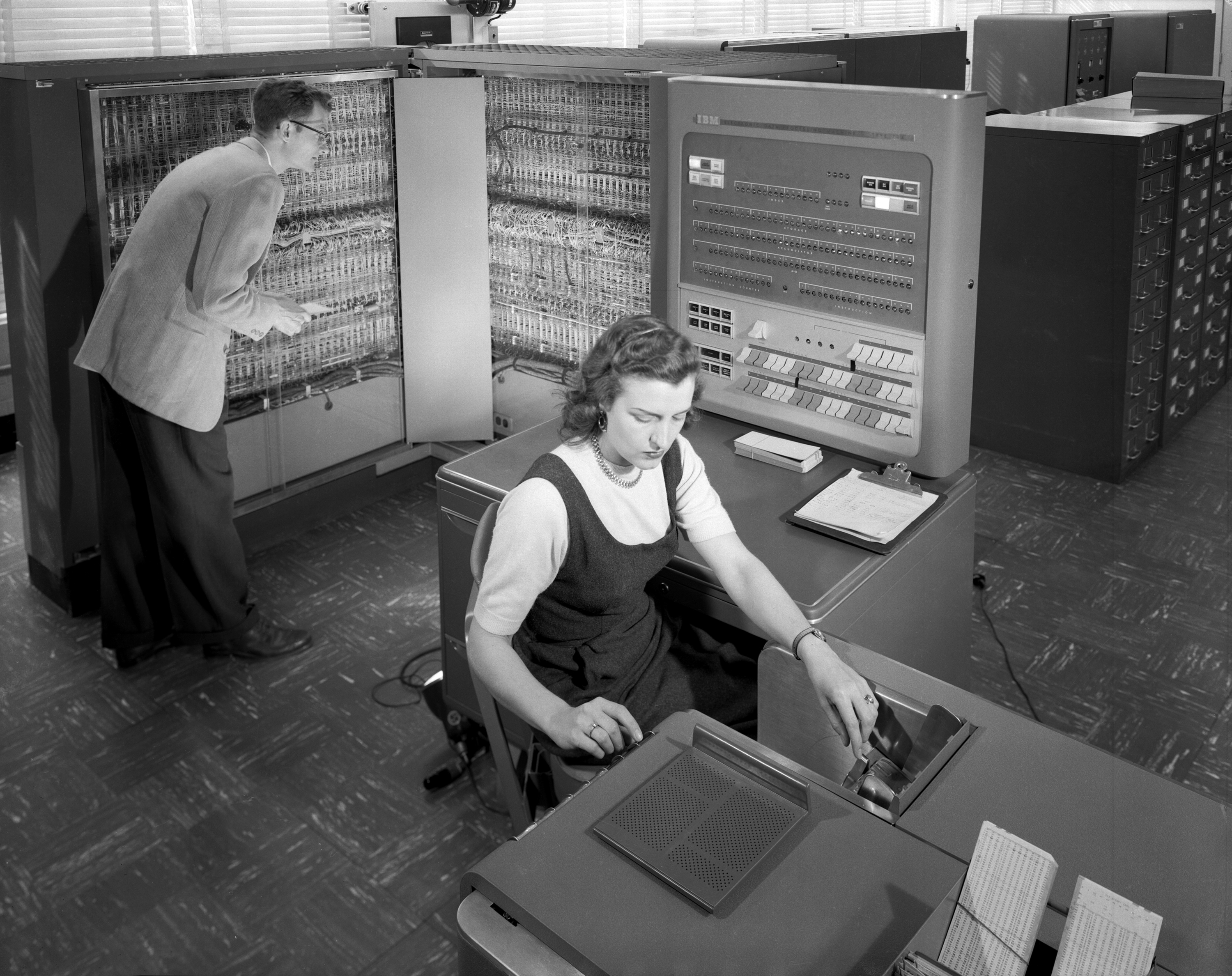

John Larry Kelly Jr., working with programmer Carol Lochbaum, used an IBM 704 computer and a vocoder to synthesize "Daisy Bell (Bicycle Built for Two)," with musical accompaniment from Max Mathews. It holds the Guinness World Record for the first song performed using computer speech synthesis. Arthur C. Clarke happened to be visiting Bell Labs that day, watched the demo, and later wrote it into HAL 9000's death scene in 2001: A Space Odyssey.
Kurzweil Reading Machine (1976)
Ray Kurzweil combined optical character recognition (OCR) with text-to-speech to build a device that read printed text aloud for blind and visually impaired users. Stevie Wonder caught a demo on the Today Show in 1976 and became one of its first customers, kicking off a decades-long friendship between the two. It was the first commercial product to pair OCR with TTS, and it proved there was real demand for the technology outside the lab.
DECtalk (1983) and MacinTalk (1984)


Dennis Klatt's formant synthesis research at MIT became the engine behind DECtalk, which DEC announced in 1983 and began shipping the following year. It offered multiple voices, including "Perfect Paul," modeled on Klatt's own voice. DECtalk stayed the gold standard for commercial TTS for over a decade, and Stephen Hawking used a system built on the same technology as his voice from the mid-1980s onward.
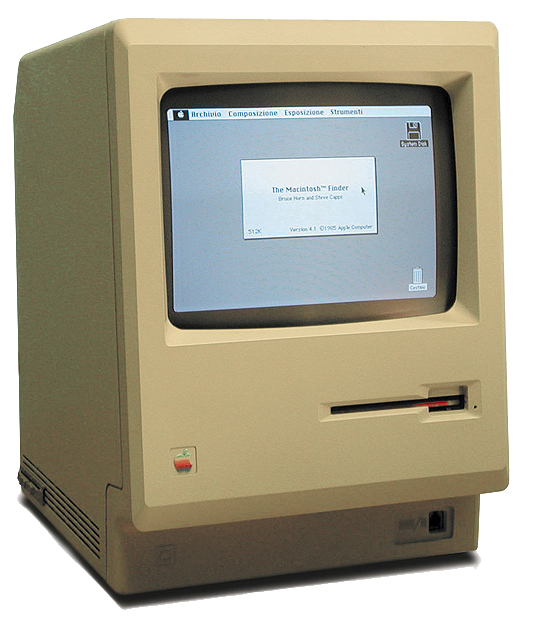

The original Macintosh shipped with MacinTalk in 1984. At the launch event, Steve Jobs had the computer introduce itself by speaking to the audience, a moment that still holds up watching the footage today. It put TTS on millions of desktops for the first time.
1990 to 2005: concatenative and statistical synthesis
PSOLA (France Telecom, 1990)
Eric Moulines and Francis Charpentier published the PSOLA (Pitch-Synchronous Overlap-Add) algorithm in Speech Communication (full paper) while working at France Telecom's research arm, and it changed what was practical. Instead of generating speech from rules alone, systems could now splice together recordings of real human speech and adjust the pitch and duration of each segment without the quality falling apart. That one paper unlocked practical concatenative synthesis for an entire industry.
Festival (University of Edinburgh, 1996)
Alan Black, Paul Taylor, and Richard Caley built Festival, an open-source, multi-lingual TTS framework, at the University of Edinburgh's Centre for Speech Technology Research. It became the dominant research platform worldwide for years afterward and put real speech synthesis tools within reach of any lab that wanted them, not just the ones with corporate budgets.
AT&T Natural Voices (2001)
AT&T Labs released Natural Voices, a unit-selection system that picked from thousands of recorded speech segments to construct each utterance. Voices like "Crystal" and "Mike" represented the peak of concatenative TTS quality, and they saw wide deployment in IVR and telephony systems for years afterward.
| Approach | How it works | Trade-off |
|---|---|---|
| Formant synthesis | Rules control electronic resonance parameters | Small footprint; robotic sound |
| Concatenative (unit selection) | Selects and splices recorded speech segments | Natural sound; large database, inflexible |
| Statistical parametric (HMM) | Trained models predict speech parameters | Tiny footprint, adaptable; "buzzy" vocoder quality |
HTS and HMM-based synthesis (2002 to 2005)
Keiichi Tokuda, Heiga Zen, and colleagues at the Nagoya Institute of Technology released HTS, an open-source toolkit that trained Hidden Markov Models to predict spectral and pitch parameters straight from text (SSW6 paper), in December 2002. Instead of splicing recordings, it generated speech from learned statistical patterns. The approach proved itself at the 2005 Blizzard Challenge, where the Nitech team's HTS-based system placed among the top entries. It had a smaller footprint than concatenative systems and could adapt to new voices with less data, but vocoder-generated audio still sounded muffled next to real recordings.
2011 to 2019: voice assistants and the neural revolution
Siri (Apple, 2011)
Siri launched on the iPhone 4S in October 2011, making voice interaction with a mobile device mainstream. It triggered an industry-wide arms race in voice assistants and made TTS quality a consumer differentiator overnight.
Amazon Alexa and Echo (2014)
Amazon announced the Echo, powered by Alexa, in November 2014. Its voice ran on technology from IVONA, a Polish text-to-speech company that Amazon had acquired in January 2013. The Echo created the smart speaker category almost overnight and put TTS into millions of living rooms.
WaveNet (DeepMind, 2016)
DeepMind's WaveNet generated raw audio waveforms sample by sample using an autoregressive neural network (paper), published in September 2016. Listeners rated it significantly closer to natural speech than any prior system, a genuinely startling result at the time. The catch: producing one second of audio initially took minutes of compute, so nobody was shipping this in a live product yet.
Tacotron 2 (Google, 2017 to 2018)
Google's Tacotron 2 combined a sequence-to-sequence spectrogram predictor with a WaveNet vocoder (paper), described in a paper published in December 2017 and refined through 2018. In controlled listening tests it scored a mean opinion score of 4.53, within a hair of the 4.58 that professionally recorded human speech earned in the same test. This was the architecture that proved neural TTS could reach near-human quality, at least under tightly controlled listening conditions.
Cloud neural TTS APIs (2018 to 2019)
Google Cloud launched Text-to-Speech with WaveNet voices in March 2018. Microsoft Azure and Amazon Polly followed with their own neural engines in 2019. In under two years, neural TTS went from a research paper to a commodity any developer could reach through an API call.
2022 to 2026: voice cloning, conversational AI, and new guardrails
ElevenLabs (2022)
Piotr Dabkowski and Mati Staniszewski founded ElevenLabs in 2022, and their product made high-quality voice cloning accessible to anyone with a browser and a few minutes. It also kicked off a public argument the industry still hasn't settled: what real safeguards should exist around synthetic voices, and who's supposed to enforce them.
VALL-E (Microsoft, 2023)
Microsoft Research reframed TTS as a language modeling problem in a paper published in January 2023. VALL-E treated speech as discrete audio tokens, drawn from Meta's EnCodec codec, and predicted them autoregressively rather than generating a continuous waveform. Feed it three seconds of reference audio and it could synthesize new speech in that voice. That was the real shift: one model, any voice, no fine-tuning required.
OpenAI TTS API (2023)
OpenAI shipped its TTS API at its first DevDay in November 2023, with six built-in voices and fast streaming support. Its sheer developer reach put neural TTS in front of an audience far bigger than any research demo could manage on its own.
Any sufficiently advanced technology is indistinguishable from magic
F5-TTS and Kokoro (2024)
F5-TTS, from Shanghai Jiao Tong University, used flow matching to skip phoneme alignment almost entirely (paper). Kokoro, from the small team at Hexgrad, hit near state-of-the-art quality with just 82 million parameters: small enough to run on a laptop, and its weights went public on Christmas Day 2024. Both were open source and Apache-licensed, which mattered almost as much as the architecture choices.
Sesame CSM (2025)
Sesame released CSM (Conversational Speech Model) in March 2025, built for multi-turn dialogue rather than one-off utterances (model card). Earlier systems synthesized each line in isolation. CSM carried prosody and tone across an entire conversation, using the previous turns as context for the next one.
Multimodal LLMs absorb TTS
OpenAI's GPT-4o and Google's Gemini 2.0, both launched in 2024, demonstrated native voice input and output inside a single model rather than bolting a TTS engine onto a text model after the fact. That shift keeps accelerating: voice is becoming just another built-in capability of a large language model, alongside text and vision.
On the regulatory side, the FCC declared AI-generated voices in robocalls illegal under the Telephone Consumer Protection Act in February 2024, opening robocallers up to steep fines and consumer lawsuits. SAG-AFTRA's actors ended their 2023 strike with a contract that wrote consent and disclosure requirements around AI voice replication directly into a labor agreement, one of the first of its kind.
The most consequential change, though, arrived just this month. The EU AI Act's Article 50 transparency rules took effect on August 2, 2026, and they target synthetic audio specifically: any AI system that generates or manipulates speech now has to mark that output in a machine-readable format so it can be detected as artificial, and anyone deploying a voice deepfake has to disclose it as AI-generated. The rule doesn't reach backward to older audio, and it carves out exceptions for satire, fiction, and law enforcement work, but the penalties for getting it wrong run up to 15 million euros or 3 percent of global annual turnover. After several years of voice cloning shipping faster than anyone could regulate it, this is the first rule with real teeth behind it, and TTS vendors with EU customers have spent the summer scrambling to add watermarking to their pipelines.
Get started with TTS
Telnyx runs text-to-speech on the same carrier network where voice calls terminate. That co-located architecture cuts out the inter-provider hops that add latency in a lot of multi-vendor pipelines.
To get started with TTS on Telnyx:
- Create a Telnyx account and generate an API key
- Choose a voice from the TTS API voice library
- Send text to the API and receive synthesized audio in real time
- Integrate with Telnyx Voice API for live call playback
- Monitor quality and latency from a single dashboard
Frequently asked questions
When was text-to-speech invented?
The earliest documented speech synthesis device is Wolfgang von Kempelen's speaking machine, which he started building in 1769 and finished in 1791. Christian Kratzenstein's vowel-reproducing tubes, built around the same period, won a St. Petersburg Academy of Sciences prize in 1780. The first full TTS system that converted arbitrary text to speech came later, in 1968, when Noriko Umeda and colleagues at Japan's Electrotechnical Laboratory built the first general-purpose English text-to-speech system.
What was the first TTS software?
MITalk, developed at MIT in the 1970s by Jonathan Allen, M. Sharon Hunnicutt, and Dennis Klatt, was one of the first comprehensive text-to-speech software systems for English. DECtalk, announced by DEC in 1983 and shipped the following year, became the first widely successful commercial TTS product.
How does modern TTS work?
Most modern TTS systems use neural networks. A text encoder converts input text into an intermediate representation (typically a mel spectrogram), and a neural vocoder converts that spectrogram into an audio waveform. Some newer systems generate audio tokens directly using language model architectures.
What is neural TTS?
Neural TTS refers to text-to-speech systems powered by deep neural networks rather than rule-based or statistical methods. DeepMind's WaveNet (2016) was the first major neural TTS system. Google's Tacotron 2 (2017) was the first to achieve near-human quality in controlled listener tests.
Can AI clone any voice?
Modern systems like VALL-E can replicate a voice from as little as three seconds of audio, though quality still improves with more reference material. The legal and ethical rules around this are catching up fast: the EU AI Act's Article 50 disclosure rules took effect in August 2026, and the FCC has already ruled AI-generated robocall voices illegal in the US.